License Requirements

How to get an insurance license

Insurance licensing requirements vary by state and license type. Requirements may include pre-licensing education, an insurance licensing exam, an application, and a background check or fingerprinting. The order of these steps can also vary by state.

General Insurance License Requirements

Depending on the state and license type, the licensing process may include:

  • Meeting the state's age and eligibility requirements
  • Completing any required pre-licensing education
  • Passing the applicable insurance licensing exam
  • Completing any required background check or fingerprinting
  • Submitting a license application and required fees

Select your state below to review the specific license requirements that apply to you.

Review your state's requirements

Continue

Step 1: Prepare for the Insurance Licensing Exam

Insurance education requirements vary by state and license type. Some states require applicants to complete an approved pre-licensing course before taking the licensing exam, while others do not require pre-licensing education.

For example, Florida insurance license requirements include state-approved pre-licensing education for many resident licenses, while Texas insurance license requirements do not include a pre-licensing education requirement for many common insurance licenses. When pre-licensing education is not required, an exam prep course can provide structured preparation for the licensing exam.

Examples of pre-licensing credit hour requirements:

  • Life insurance license: often 20-40 hours
  • Health insurance license: often 20-40 hours
  • Life & Health insurance license: often 40-60 hours

Helpful Tip

You can obtain insurance licenses in multiple states. After obtaining your resident insurance license, you can generally apply for non-resident licenses for the same lines of authority in other states without completing additional pre-licensing education or taking another licensing exam. Requirements and fees vary by state.

Step 2: Pass the Insurance Licensing Exam

After completing any required pre-licensing education and preparing for the exam, you can schedule the state insurance licensing exam with your state's designated testing provider. Exams are administered at testing centers, and some states also offer remote online testing.

Insurance licensing exams are multiple-choice and timed, with the time limit varying by exam. Passing requirements vary by state, license type, and testing program. Some states report a percentage score, while others use a scaled scoring system. You will receive your exam results after completing the test.

Helpful Tip

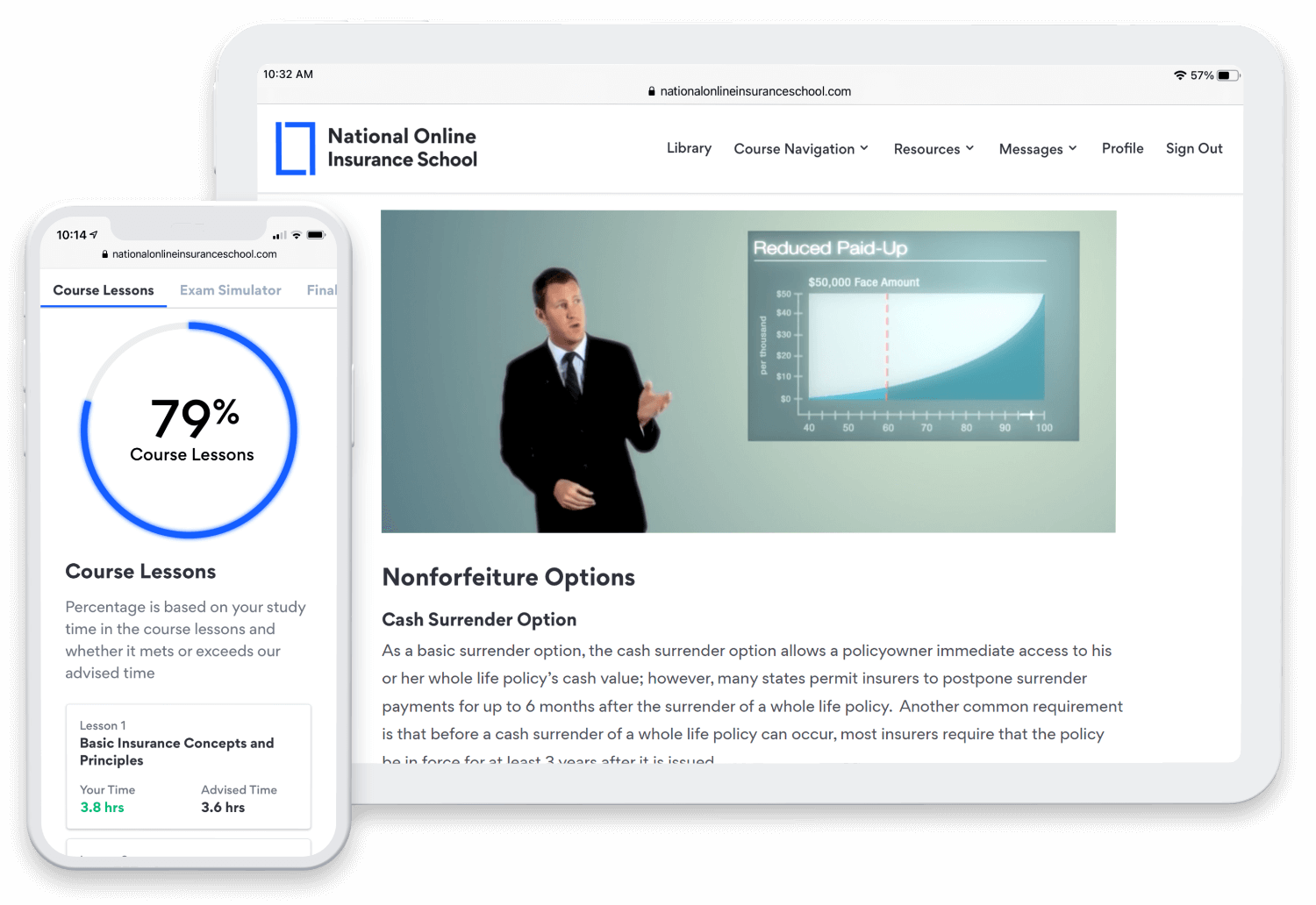
Many states limit the number of times you can take the licensing exam within a specific period. A strong understanding of the exam topics and practice with realistic questions can help you prepare to pass on your first attempt. Our Insurance Exam Simulator is included with enrollment and provides realistic practice exams to help you prepare for the state licensing exam.

Step 3: Apply for Your Insurance License

After completing any required education and passing the licensing exam, you can submit an application for your insurance license. Applications are submitted online to the state insurance department or through an authorized licensing service.

The state insurance department will review the application and verify that the licensing requirements have been satisfied before issuing the license. Application procedures, fees, processing times, and the official names of insurance licenses vary by state and license type.

Helpful Tip

Application fees and processing times vary by state. Review your state's insurance license requirements before applying to confirm the current application process, fees, and any additional requirements.

Step 4: Complete Any Required Background Check

Many states require insurance license applicants to complete a criminal background check, and some states require applicants to submit fingerprints as part of the process. The timing and procedures vary by state, with some states requiring this step before the license application and others after the application is submitted.

A criminal history does not automatically prevent an applicant from obtaining an insurance license. State insurance departments review background information according to their licensing laws and may require additional documentation when determining eligibility.

Helpful Tip

If you have questions about whether a previous criminal offense or other background issue could affect your eligibility, contact your state's Department of Insurance before beginning the licensing process.

Insurance Licensing Resources

Learn more about the insurance licensing process, including exam difficulty, study time, costs, and how long it takes to become licensed. Explore our exam prep and pre-licensing courses, or select an article below for general guidance, and choose your state to review specific license requirements.

Pass your exam in 1 to 2 weeks

Select your state to get started with clear, trusted exam prep.
Insurance Pre-Licensing Course

© 2008-2026 National Online Insurance School
Privacy Policy   |   Terms of Service   |   Site Map

LinkedIn   facebook